Specialist Supported Housing Investment Risks: What Investors Need to Assess Before Committing Capital
Key Takeaways Click to Expand
- Specialist Supported Housing is not standard buy-to-let. Returns depend on the property, provider, support model, lease terms, funding and regulation.
- Leases do not eliminate risk. Check break clauses, voids, repairs, defaults and provider failure provisions.
- Due diligence on providers is essential. Assess their legal status, finances, experience, insurance and contingency arrangements.
- Funding is not guaranteed. Housing Benefit and support funding depend on the specific arrangement and eligibility.
- Property suitability matters. Check planning, licensing, safety, accessibility and energy-efficiency requirements.
- Void, finance and exit risks remain. Specialist properties can have fewer lenders and a narrower resale market.
- Get independent professional advice. Legal, property, finance, accounting and tax advice can help identify risks before investing.
- Ask one core question: who is responsible, how is it funded, and what happens if they cannot meet that obligation?
Table of Contents
Table of Contents
Specialist Supported Housing (SSH) can offer investors exposure to a housing sector designed for people who need accommodation alongside care, support or supervision. However, it is not simply a higher-rent version of conventional buy-to-let.
Its risk profile depends on the quality and suitability of the property, local need, the housing provider, the support model, lease and management agreements, rent-setting arrangements, regulatory compliance and, in some cases, Housing Benefit and wider public-sector funding. Each element requires careful due diligence.
A well-structured SSH arrangement may reduce an owner’s direct involvement with resident management. It does not remove property, counterparty, legal, operational or market risk. Investors should treat it as a specialist asset class and understand precisely how income is generated, who carries each obligation and what could happen if circumstances change.
What does Specialist Supported Housing investment involve?
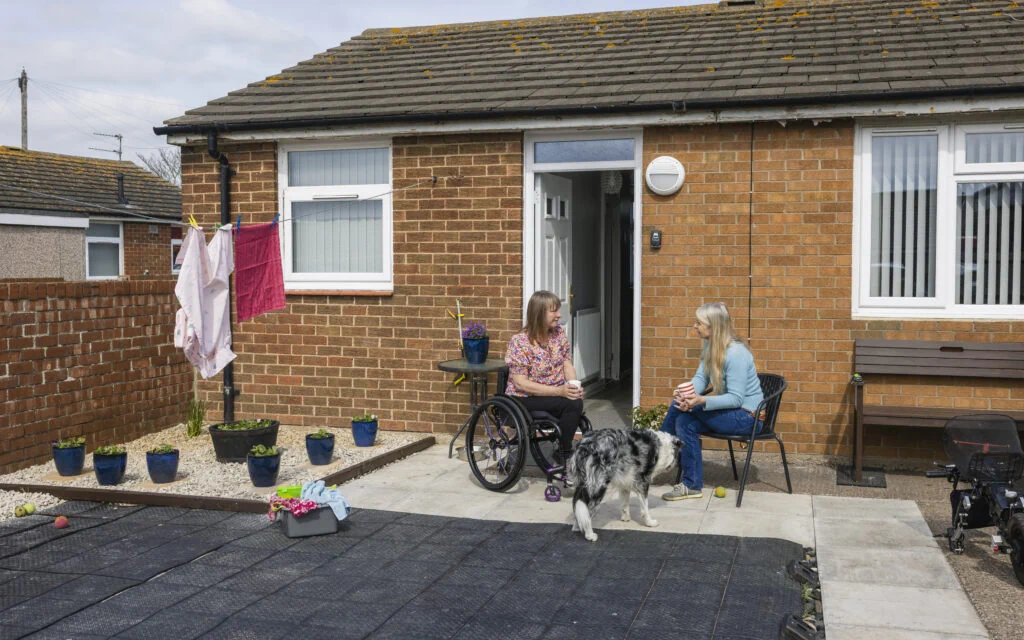
Specialist Supported Housing provides homes for people who need support to live as independently as possible. Residents may include people with learning disabilities, autistic people, those with mental-health needs, people leaving homelessness services, care leavers or people with other complex needs.
The term covers a broad range of arrangements. A typical model can involve several parties:
- The investor or property owner – owns the physical property.
- The housing provider – lets or manages the accommodation and undertakes housing-management functions.
- The support or care provider – delivers the support required by residents.
- Local authorities, the NHS or referral agencies – may assess need, commission services or make referrals.
- Residents – occupy the property under the relevant tenancy or occupancy arrangement.
Government guidance defines supported housing as accommodation where residents receive care, support or supervision to help them live as independently as possible. As set out in the Department for Work and Pensions’ Housing Benefit guidance for supported housing claims, the relevant Housing Benefit treatment depends on the facts of the individual scheme, including the landlord type, the nature of the support provided and who has arranged it.
This multi-party structure is why SSH investment needs a different approach from a standard assured shorthold tenancy.
Why SSH has a different risk profile from conventional residential property
In a conventional buy-to-let, the investor’s core questions often focus on tenant demand, achievable rent, mortgage costs, condition, management and resale value.
Those questions still matter in SSH, but they are not enough. The property must also work for its intended resident group and operating model. Investors need to understand:
- Whether there is evidence of sustained local demand for the proposed accommodation
- Which organisation will provide housing management
- Who delivers care, support or supervision
- Whether the provider has the skills, governance and resources needed for its role
- How rental income is assessed, collected and reviewed
- What the lease or management agreement says about repairs, voids, rent reviews, early termination and enforcement
- Whether the property meets planning, licensing, safety and energy-efficiency requirements
- Whether the eventual buyer market will be wider than the original investor audience
The Government’s Supported Housing Review 2023 highlights both the scale and complexity of the sector. It estimates that Great Britain has around 634,000 supported-housing units, while noting that Housing Benefit rules, funding arrangements and local authority assessment processes vary across different forms of provision.
Property and physical asset risks
The property may not be suitable for the intended use
A house can be legally lettable as a conventional rental but unsuitable for specialist supported use. Suitability may depend on layout, bedroom size, bathroom provision, accessibility, communal space, garden safety, proximity to local services, transport links and the ability to adapt the home for residents’ needs.
For some resident groups, a property may need alterations such as level access, widened doorways, adapted bathrooms, sensory considerations, fire-safety measures or additional staff space. These works can increase acquisition, maintenance and reinstatement costs.
Investors should not assume that a provider’s interest in a property confirms long-term suitability. Ask for written evidence of the property specification, referral criteria and any adaptations required before exchange.
Repairs and lifecycle costs can be material
Specialist use can create a different maintenance profile from a typical single-household tenancy. Wear and tear, void repairs, security measures, adaptation maintenance and damage can all affect the cost of ownership.
The key issue is not whether costs will occur, but who is contractually responsible for them. The agreement should identify responsibility for:
- Day-to-day repairs
- Planned maintenance
- Major works and capital expenditure
- White goods and furnishings
- Adaptations and replacement equipment
- Damage beyond fair wear and tear
- Insurance excesses
- Dilapidations at the end of a lease or management agreement
A long contractual term does not automatically mean that the owner has no repair exposure.
Standard landlord compliance still applies
The investment may also remain subject to ordinary property-law and landlord obligations, depending on the structure. These can include gas safety, electrical safety, smoke and carbon-monoxide alarms, fire safety, deposit rules where relevant, local licensing and minimum energy-efficiency standards.
For domestic privately rented properties in England and Wales that fall within the regulations, the current Minimum Energy Efficiency Standard (MEES) landlord guidance generally requires an EPC rating of at least band E unless a valid exemption is registered. The Government has also confirmed that privately rented homes in England will need to meet an EPC C or equivalent standard by 1 October 2030, subject to applicable exemptions.
Location and demand risks
Demand must be evidenced, not assumed
A general shortage of supported housing does not prove demand for a particular property, resident group or postcode.
Local demand may depend on commissioning priorities, referral pathways, local authority strategies, transport, access to health and support services, neighbouring uses and the availability of suitable staff. A scheme designed for one cohort may not be appropriate for another.
Before investing, ask:
- What resident group is the property intended for?
- Is there a documented local need for this type of home?
- Who makes referrals and on what basis?
- Is the property aligned with local authority, NHS or provider strategy?
- Are there competing schemes nearby?
- Is there a risk of local saturation?
- What happens if the referral route changes?
The value of a supported-housing asset is therefore linked both to its bricks-and-mortar value and to the viability of its operating use.
Local opposition and planning issues can affect delivery
Supported housing can attract scrutiny where communities are concerned about parking, anti-social behaviour, neighbourhood management or concentration of similar properties. These concerns do not determine whether a scheme is appropriate, but they can affect planning, licensing, local relationships and operational delivery.
Planning use class, permitted development rights, HMO status and licensing requirements are fact-specific. Under the Government’s HMO licensing guidance for landlords, a property may be an HMO where at least three people from more than one household share facilities such as a kitchen or bathroom. Larger HMOs require a licence, while some local authorities also operate additional licensing schemes for smaller HMOs. Investors should obtain written confirmation from the relevant local authority or an appropriately qualified planning adviser rather than relying on assumptions.
Housing provider and operator risks
The provider is a central counterparty risk
In many SSH structures, the housing provider sits between the investor and the residents. Its ability to manage tenancies, maintain the property, collect rent, respond to incidents and work effectively with support partners can have a direct impact on the investment.
A provider’s legal status or charitable purpose should not be treated as a substitute for due diligence. Investors should investigate:
- Legal identity, company number and registered address
- Governance structure and directors or trustees
- Financial accounts and available financial information
- Relevant experience in supported housing
- Track record in the intended resident group and geography
- Housing-management capability
- Complaints, enforcement action or adverse public information
- Insurance arrangements
- Policies for safeguarding, repairs, voids, anti-social behaviour and resident wellbeing
- Contingency plans if support provision changes
Where the provider is a registered provider of social housing, investors can also review information published by the Regulator of Social Housing. Registration may be relevant, but it does not by itself validate a particular property, contract or investment outcome.
Support-provider failure can affect housing performance
The housing provider and support provider may be separate organisations. This separation can be appropriate, but it introduces coordination risk.
If the support provider loses staff, funding, registration, a commissioning relationship or operational capacity, residents’ needs may no longer be met as intended. This can disrupt referrals, occupancy and the ability of the housing provider to operate the scheme.
Where personal care is provided, the care provider may need to register with the Care Quality Commission (CQC). The CQC explains in its guidance on personal care and registration that personal care delivered in supported living and extra-care settings can be a regulated activity, depending on the nature of the service. Investors should confirm which organisation is responsible for care, whether registration is required and how compliance will be maintained.
Investors should confirm which organisation is responsible for care and support, whether registration is required and how service continuity will be managed.
Lease and contractual risks
A long lease is not the same as a guaranteed investment
A long lease, management agreement or rent arrangement may provide a clearer contractual framework than a standard residential tenancy. It does not guarantee that rent will be paid or that the counterparty will remain able to perform.
The strength of the arrangement depends on the actual contract and the financial resilience of the party giving the commitment.
Investors should ask a solicitor experienced in commercial and supported-housing arrangements to review:
- The contracting parties and their legal capacity
- Term length and commencement date
- Rent amount, payment frequency and review mechanism
- Break clauses and termination rights
- Events of default
- Rights of assignment, subletting or novation
- Repairing and insuring obligations
- Service-charge treatment
- Void responsibility
- Rent suspension provisions
- Guarantor arrangements, if any
- Security, deposits or other credit support
- Dispute-resolution provisions
- Dilapidations and handback condition
A contract can appear attractive because it has a long headline term, but contain broad break rights, weak enforcement provisions or unclear repair obligations. The detail matters more than the headline.
Consider the consequences of provider insolvency or withdrawal
A robust due-diligence process should consider adverse scenarios, including a provider’s withdrawal, insolvency or material breach.
Questions to ask include:
- Can the agreement be terminated early?
- Who has possession if the agreement ends?
- Can another provider be appointed?
- Does the owner need lender consent to replace the provider?
- What happens to residents and referral arrangements?
- Is there a period with no income while a replacement operator is found?
- What obligations survive termination?
The appropriate answer will vary by structure. The important point is to understand the pathway before committing capital.

Considering Specialist Supported Housing Investment?
Understand the property, provider, lease, funding and risks before committing your capital. Speak with 365 Invest about the due diligence and investment considerations behind Specialist Supported Housing opportunities.
Rent, income and Housing Benefit risks
Rental income may be linked to several moving parts
SSH rental income may be paid by a housing provider, residents, local authorities or a combination of parties. In some schemes, eligible housing costs are met through Housing Benefit. In others, the structure may be different.
Housing Benefit is assessed at an individual claimant level and can help with eligible accommodation costs, such as rent and eligible service charges. However, as the Government’s Supported Housing Review 2023 explains, Housing Benefit cannot fund care, support or supervision costs. Investors should therefore understand how these services are funded separately and whether that funding is sustainable.
That distinction matters. A scheme may rely on a support model that is separately funded, commissioned or delivered. Investors should understand whether the wider operating model remains viable if any source of funding changes.
Specified accommodation rules are complex
“Specified accommodation” is a Housing Benefit classification that includes exempt accommodation, managed properties, refuges and local authority hostels. The classification can affect how eligible rent and service charges are assessed.
For exempt accommodation, the landlord must be an eligible not-for-profit organisation and provide care, support or supervision directly, or through another organisation acting on its behalf. The Department for Work and Pensions’ Housing Benefit guidance for supported housing claims explains that local authorities should assess whether that support is more than minimal, sufficiently connected to the accommodation and supported by clear evidence.
This is not a box-ticking exercise. If the local authority determines that the facts do not support the claimed category or eligible charges, it can affect the income assumptions behind a scheme.
Investors should not rely on generic statements that “Housing Benefit covers the rent”. Request scheme-specific evidence and obtain independent advice on the legal and contractual implications.
Rent reviews may not match inflation or costs
A rent-review clause may be fixed, index-linked, open-market, capped or subject to another mechanism. Each approach carries different risks.
For example:
- A fixed review may lag behind inflation and maintenance costs.
- An index-linked review may be subject to a cap.
- A review may be conditional on external assessment or affordability.
- A review may not apply if the agreement is varied or terminated.
- A rent level may be challenged, reassessed or found partly ineligible.
Investors should model a range of scenarios rather than assuming rent growth.
Regulatory and compliance risks
Regulation is evolving in England
The supported-housing regulatory landscape is changing. In April 2026, the Government published its response to the Supported Housing regulation consultation, setting out its intention to introduce a locally led licensing regime across England and National Supported Housing Standards. The Government expects to consult on the detailed regulations in late 2026 before laying them in Parliament.
The final requirements, timings and implementation details are not yet settled. This creates regulatory-change risk for providers and investors, particularly where a business model relies on a particular licensing, Housing Benefit or operating assumption.
Investors should establish:
- Which current licences, registrations and approvals apply
- Which party is responsible for obtaining and maintaining them
- Whether the provider has a plan for forthcoming regulatory changes
- Whether the agreement allows costs or operational responsibilities to shift to the owner
- Whether a future licensing decision could affect occupation or income
Care, support and supervision must be genuine and appropriate
Supported housing should not be treated as a label applied to ordinary shared accommodation. The support model must reflect residents’ needs and be delivered properly.
Government Housing Benefit guidance for supported housing claims makes clear that care, support or supervision is central to several specified-accommodation categories. It also explains that local authorities consider who provides that support, whether it is sufficient and how it is funded when assessing claims.
From an investor’s perspective, weak evidence of need, inadequate support delivery or unclear responsibility between housing and care providers can create operational, reputational and financial risk.
Void and occupancy risks
A provider may take responsibility for resident allocation and housing management, but that does not mean void risk disappears. The allocation process can be affected by referral volumes, resident compatibility, local commissioning decisions, staffing capacity, safeguarding concerns or the need for property adaptations.
Check the agreement carefully:
- Is rent payable during void periods?
- Is there a waiting period before void protection applies?
- Are exclusions or limits written into the contract?
- Who pays for re-letting, cleaning, repairs and security?
- Can the provider stop paying rent if a room is unavailable due to damage or non-compliance?
- What evidence supports the anticipated occupancy rate?
Do not treat historical occupancy elsewhere as evidence that a particular property will remain occupied.
Financing and mortgage risks
Not all mortgage lenders will accept every supported-housing structure, provider arrangement or lease. Lender appetite can change, and some lenders may treat lease-based, corporate-let, HMO or supported-housing arrangements differently from mainstream buy-to-let.
Before exchanging contracts, investors should confirm in writing:
- Whether the lender permits the proposed use
- Whether the lease or management agreement is acceptable
- Whether the borrower needs consent to let or a specialist product
- Whether the valuation reflects the actual tenancy or operating arrangement
- Whether a provider change requires lender consent
- Whether the property remains mortgageable if the current contract ends
Interest-rate movements, refinancing criteria, valuation changes and debt-service costs can all affect cash flow. An investor should avoid assuming that a future refinance will be available on the same terms.
Exit and liquidity risks
SSH assets can have a narrower buyer pool than standard residential property, particularly where value is tied to a specific provider relationship, lease, tenant profile or adapted layout.
A future buyer may assess:
- The property’s open-market residential value
- The remaining lease term
- The financial standing of the provider
- Rent and review provisions
- Condition and adaptation requirements
- Local demand evidence
- Regulatory position
- Mortgage availability
- The ease of replacing the provider if necessary
A property may be saleable, but not necessarily at the price, timescale or buyer demand originally anticipated. Investors should consider both an “operating sale” scenario and a “vacant-possession or conventional-let” scenario, where legally and practically possible.
Due diligence checklist before investing in Specialist Supported Housing
A thorough review should cover the property, provider, contract and operating model.
Property and location
- Is the property suitable for the intended resident group?
- Has an independent survey identified condition, repair or adaptation costs?
- Are planning, HMO, licensing and building-control requirements understood?
- Does the layout comply with relevant fire-safety and amenity expectations?
- Is there documented local demand for this form of accommodation?
- Are transport, healthcare, community services and staff access appropriate?
Housing provider and support provider
- Who are the legal contracting parties?
- What experience do they have in supported housing?
- Are accounts, governance, insurance and key policies available for review?
- Who manages tenancies, repairs, anti-social behaviour and safeguarding?
- Who provides support or care?
- Is CQC registration required, and if so, is it in place?
- What is the contingency plan if either provider withdraws?
Lease and income structure
- What is the exact rent and who is obliged to pay it?
- Is the rent fixed, index-linked or subject to review?
- Who bears void risk?
- Who pays for repairs, major works, insurance and adaptations?
- What are the break clauses and termination rights?
- Are there service charges or deductions that could affect net income?
- What contractual security supports payment obligations?
- Does the agreement work with the proposed mortgage?
Funding and resident arrangements
- Is any income dependent on Housing Benefit or another funding route?
- What evidence supports eligibility assumptions?
- Which costs are eligible accommodation costs and which are support costs?
- Who funds the care or support element?
- Is the model reliant on a particular commissioning arrangement or referral pathway?
- What happens if benefits, commissioning priorities or local assessment practices change?
Structured investment model versus a guaranteed investment
A structured SSH model may allocate responsibilities between an owner, housing provider and support provider through formal contracts. That can create a more defined operational framework than a landlord dealing directly with individual tenants.
It is still not a guaranteed investment.
The owner may remain exposed to counterparty failure, contractual disputes, property costs, regulatory change, voids, financing constraints, valuation changes and exit risk. Returns depend on the specific asset, legal documents, provider performance and market conditions.
The right question is not “Is the income guaranteed?” It is:
“What are the income assumptions, who is contractually responsible for each obligation, what evidence supports those assumptions and what happens if the arrangement changes?”
When to seek independent advice
Independent professional advice is particularly important where the transaction involves a long lease, corporate or provider tenant, specialist funding structure, material adaptations or a purchase funded by borrowing.
Consider appointing:
- A solicitor with relevant property and commercial-contract experience
- A surveyor to assess condition, value, suitability and required works
- An authorised mortgage broker before committing to a structure involving finance
- An accountant or tax adviser to consider ownership, tax treatment and transaction implications
- A planning consultant where use class, HMO status or local restrictions are uncertain
- A regulated financial adviser where the decision forms part of a wider investment strategy
No adviser can remove investment risk. Their role is to help investors understand the legal, financial and practical implications before contracts become binding.
Understand the model before assessing the opportunity
Specialist Supported Housing can serve an important housing need and may provide a different form of residential property exposure. But the quality of the investment case depends on the evidence behind the property, the provider, the support arrangement, the contract and the funding model.
For investors considering this sector, the first step is to understand how the proposed structure works in practice, rather than relying on headline rent, lease length or broad claims about demand.
To explore the parties, responsibilities and due-diligence considerations in more detail, learn how 365 Invest approaches Specialist Supported Housing investment.
Sources
- Department for Work and Pensions. (Updated 1 April 2026). Housing Benefit guidance for supported housing claims
- Ministry of Housing, Communities and Local Government and Department for Work and Pensions. (2024). Supported Housing Review 2023
- Ministry of Housing, Communities and Local Government and Department for Work and Pensions. (Updated 19 June 2026). Supported Housing regulation: consultation
- Care Quality Commission. (Updated 12 May 2022). Personal care
- Department for Energy Security and Net Zero. (Updated 5 May 2026). Domestic private rented property: minimum energy efficiency standard – landlord guidance
Frequently Asked Questions
- Is Specialist Supported Housing a low-risk property investment?
No property investment is low risk by default. SSH may have a different risk profile from conventional buy-to-let because it can involve several counterparties, specialist property requirements, complex contractual arrangements and potential reliance on Housing Benefit or other public funding mechanisms.
- Is rent in Specialist Supported Housing guaranteed?
No. A lease or management agreement may set out rent obligations, but payment depends on the terms of the contract and the counterparty’s ongoing ability to perform. Investors should review default, termination, void and enforcement provisions with independent legal advice.
- Does Housing Benefit guarantee rental income?
No. Housing Benefit is assessed according to individual circumstances and applicable rules. It can assist eligible claimants with eligible housing costs, but it does not fund care, support or supervision. Eligibility and the treatment of rent and service charges should be assessed on the facts of the scheme. (gov.uk)
- Do investors need to manage residents directly?
Not necessarily. In some structures, a housing provider undertakes day-to-day housing management. However, the investor should still understand the agreement, monitor counterparty performance and remain aware of ownership and contractual responsibilities.
- Does a long lease make Specialist Supported Housing safer?
Not automatically. A long term can offer greater visibility over the intended arrangement, but investors must examine break clauses, repair duties, default provisions, payment security, provider finances and what happens if the provider exits or fails.
- Can any residential property be used for Specialist Supported Housing?
No. The property must be appropriate for the intended residents and may need to meet specific layout, accessibility, safety, planning, licensing or operational requirements. Suitability should be evidenced before purchase.
- Is CQC registration always required?
No. CQC registration depends on the activities provided, not simply the fact that a property is used for supported living. Where personal care is delivered, registration may be required for the provider delivering that care. (cqc.org.uk)
- What is the most important due-diligence question to ask?
There is no single question, but a useful starting point is: who is responsible for each obligation, how is that obligation funded and what happens if the responsible party cannot perform? This should be answered clearly for rent, voids, repairs, support, compliance, property damage and termination.

Disclaimer: Information is for guidance only and does not constitute financial, tax or legal advice. Capital is at risk. Property values and rental income can go down as well as up. Any yield, rent or return figures are estimates based on stated assumptions and may change. Actual outcomes depend on market conditions, financing, voids, fees, repairs and tenant or lease performance. Social housing opportunities are subject to due diligence on properties and counterparties. Lease terms, including length, indexation and repair obligations, vary by asset and provider.